

 EN
EN


The Hidden Dangers of Indoor Air Pollution: Why Fresh Air Systems Are Essential
Understanding Indoor Air Quality and Its Impact on Health
The way we live today keeps pollutants trapped inside our sealed environments, sometimes reaching levels 100 times worse than what's outside, the Environmental Protection Agency has found. Indoor air isn't so great these days either. Bad IAQ is linked to all sorts of problems like breathing issues, trouble thinking clearly, and just plain feeling tired all the time because those tiny particles slip past our body's usual defenses. Most folks actually spend around 90 percent of their waking hours inside buildings, so it makes sense why getting fresh air systems installed matters so much. These systems help swap out the dirty stuff inside for cleaner air from outside, which honestly should be standard practice in every home and office nowadays.
Common Air Pollution Sources
Dangerous contaminants arise from everyday activities:
- VOCs from paints, furniture, and cleaning supplies release formaldehyde and benzene that persist for years
- PM2.5 particles from cooking smoke and candles penetrate deep into lung tissues
- CO2 accumulation from occupant respiration reduces oxygen availability
- Radon gas seeping through foundations increases long-term cancer risk
A recent Nature study links prolonged exposure to these pollutants with damage to vital organs when concentrations rise indoors.
Health Effects on Allergy and Asthma Sufferers
People who are particularly sensitive often have serious reactions when exposed to indoor pollutants. Volatile organic compounds irritate mucous membranes, fine particulate matter can tighten airways, and high carbon dioxide levels boost immune system activity by around 40% according to some studies. All these factors contribute to more frequent asthma flare-ups, persistent sinus problems, and greater need for medications, especially among kids growing up in affected environments. That's why combining good air filters with regular fresh air circulation remains so important for creating healthier living spaces.
How Fresh Air Systems Work: Ventilation, Filtration, and Air Exchange Explained
Fresh air systems vs. standalone air purifiers: Key differences in function and effectiveness
Standalone air purifiers work by filtering and recirculating the same old indoor air, whereas fresh air systems actually bring in clean outside air while getting rid of the stale stuff inside. Purifiers are pretty good at trapping things like dust and pollen from floating around, but here's the catch they don't touch carbon dioxide levels or add back oxygen which matters a lot for keeping minds sharp and productive spaces functioning well in places like classrooms and office buildings. Fresh air systems solve this problem by pulling in outdoor air that's been filtered first, and at the same time they remove those pesky volatile organic compounds right where they come from. This helps keep oxygen levels healthy and maintains better overall air quality throughout the space.
Core components: HEPA filters, activated carbon, and energy recovery ventilation (ERV)
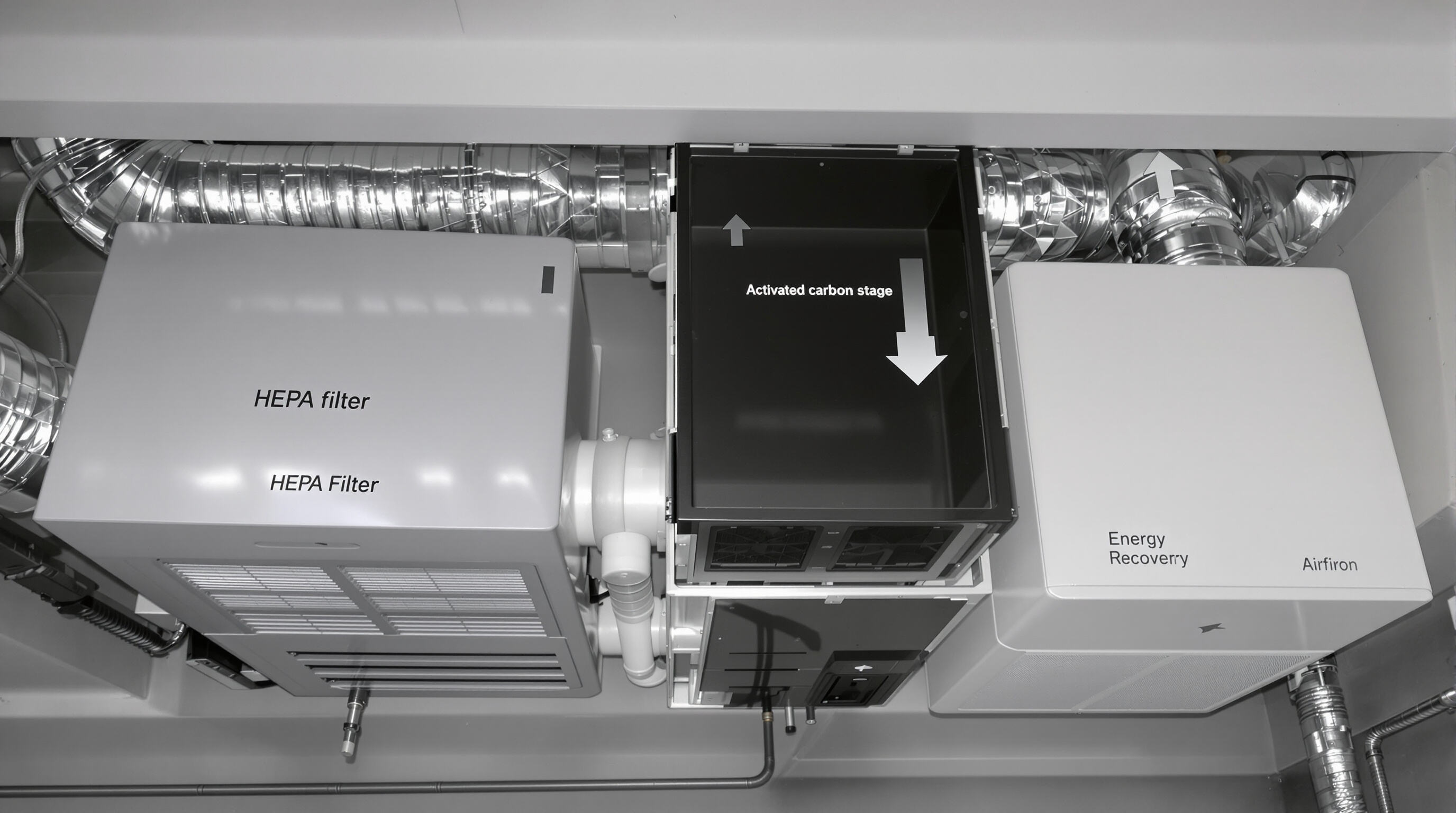
Good quality fresh air systems typically incorporate three main technologies working together. HEPA filters are pretty amazing at trapping tiny particles, catching about 99.97% of stuff that's 0.3 microns or bigger. That includes all sorts of allergens, mold spores, and those pesky PM2.5 particles we hear so much about these days. Then there are activated carbon layers which grab hold of gaseous pollutants like formaldehyde and sulfur dioxide through a process called chemisorption. The third component is the energy recovery ventilator or ERV for short. These devices work their magic by transferring both heat and moisture between the air coming in and going out using something called an enthalpy wheel. This helps cut down on energy waste quite a bit. Some studies show that ERVs can actually reduce the heating load on HVAC systems by around two thirds simply by capturing and reusing energy from exhaust air.
Supply and exhaust airflow: How balanced ventilation ensures consistent indoor air quality
Balanced ventilation works by pairing supply and exhaust fans so they balance each other out. Fresh air comes in through those sealed vents we install in walls or roofs, which actually pushes the indoor space to higher pressure levels. This helps stop dirty outside air from sneaking in through cracks and gaps. At the same time, the exhaust system creates lower pressure areas where there's lots of mess happening, think kitchens and bathrooms mostly. These spots pull bad stuff right out before it spreads everywhere else. The whole system exchanges air at around half an air change every hour, keeping carbon dioxide levels down below 1000 parts per million while still managing fine particulate matter effectively. And interestingly enough, when researchers tested this across many homes in Europe, they found that these balanced systems kept indoor PM2.5 concentrations under 12 micrograms per cubic meter even when outdoor pollution was really bad.
Proven Benefits of Fresh Air Systems in Real-World Environments

Case Study: Improving Indoor Air Quality in a Beijing Household
In 2023 researchers looked at an apartment in Beijing where people had been dealing with high levels of PM2.5 pollution averaging around 72 micrograms per cubic meter. They installed a professional grade fresh air system and checked back after half a year. The results were impressive - indoor PM2.5 levels fell all the way down to just 12 micrograms per cubic meter, which represents an 83 percent drop bringing it well within World Health Organization safety limits. Residents noticed significant improvements too, reporting about 47% fewer allergy flare ups and experiencing asthma attacks roughly 30% less frequently than before installation. These real world benefits clearly show how effective proper filtration and ventilation can be when tackling indoor air quality issues.
CO‐ and PM2.5 Reduction in a Shanghai Office Building
Fresh air systems deliver measurable results in commercial environments. Data from a 22-story Shanghai office building showed:
| Metric | Pre-Installation | Post-Installation (12 Months) | Reduction |
|---|---|---|---|
| CO‐ Levels (ppm) | 1,450 | 680 | 53% |
| PM2.5 (μg/m³) | 55 | 14 | 75% |
| Employee Sick Days | 8.2/month | 3.1/month | 62% |
The energy recovery ventilator sustained airflow without compromising HVAC efficiency—an advantage over standalone purifiers.
Measurable Gains in Respiratory Health and Employee Productivity
Harvard research (2023) found that fresh air systems contribute to 8% higher workplace productivity through improved oxygen delivery and CO‐ control. In a Guangzhou manufacturing facility, inhaler use dropped by 34% after installation, while task completion rates rose by 19%, demonstrating that air quality directly influences both health and operational performance.
Monitoring, Maintenance, and Smart Integration for Long-Term Performance
Using accurate air quality sensors (e.g., Airthings View Plus, Aranet 4) to track indoor conditions
Monitors such as the Airthings View Plus and Aranet 4 offer lab quality readings when it comes to tracking PM2.5 particulates, carbon dioxide, and volatile organic compounds. The Airthings model catches particles between zero and five microns with an error margin under three percent. Meanwhile, Aranet 4 uses NDIR technology for its CO2 measurements, staying within plus or minus thirty parts per million accuracy for about seven years straight. These devices let building managers tweak ventilation schedules with real precision. And this matters quite a bit since studies show indoor air pollution often hits levels five times higher than what we breathe outside according to EPA research.
Avoiding pitfalls of unreliable consumer-grade monitors: calibration and data accuracy
Cheap sensors tend to lose their calibration over time and might drift as much as 20% in just a few months, Lawrence Berkeley Lab found. When humidity gets above 70%, these sensors start giving wrong PM2.5 numbers. Electrochemical sensors also break down faster when exposed to ozone pollution. If accurate measurements matter, look for devices certified under ISO 17025 standards that have automatic baseline adjustments and need recalibrating once a year at minimum. Maintenance really makes a difference too. A recent study published in Building and Environment back in 2024 showed that regular upkeep stops about 9 out of 10 accuracy problems before they happen.
Smart home integration: Automating fresh air systems with real-time air quality data
Sensors connected through the Internet of Things let these systems react right away when there's a sudden jump in pollutants. For instance, if carbon dioxide levels go above 1000 parts per million, the system automatically switches into fast operation mode. And when volatile organic compounds stay high for too long, it kicks in the activated carbon filters to clean things up. All this happens behind the scenes so nobody has to manually adjust anything. The latest technology works seamlessly with existing smart home setups, making indoor air cleaner while saving around a quarter of the usual energy consumption. Studies show that these automatic air quality managers fix about three out of four problems long before anyone even realizes something might be wrong with the air they're breathing.
FAQ Section
What are some common indoor air pollutants?
Common indoor air pollutants include volatile organic compounds (VOCs), PM2.5 particles, carbon dioxide, and radon gas.
How do fresh air systems differ from standalone air purifiers?
Fresh air systems bring in filtered outside air and expel stale indoor air, while standalone air purifiers only filter indoor air without altering CO2 levels or oxygen content.
What components are essential in quality fresh air systems?
HEPA filters, activated carbon, and energy recovery ventilation (ERV) are key components.
How can fresh air systems improve health and productivity?
They improve respiratory health and increase productivity by enhancing oxygen delivery and controlling CO2 and PM2.5 levels.
